











EV Dropsides: Are they ready for commercial fleet operations?

Electric commercial vehicles are no longer limited to small urban vans and last-mile delivery operations. As EV technology continues to develop, more fleets are now exploring electric dropsides as a practical solution for day-to-day operational work.
For many operators, the key questions remain the same:
- Can an EV dropside handle a full working day?
- Will it reduce operating costs?
- What happens to payload and uptime?
- Is the range practical for real-world use?
The reality is that electric dropsides are becoming increasingly viable for many commercial applications, particularly where vehicles operate on predictable daily routes.
Why fleets are looking at EV dropsides
Fleet operators are under increasing pressure to reduce emissions while still maintaining operational efficiency and vehicle reliability. At the same time, rising fuel costs and Clean Air Zone charges are continuing to push businesses towards electrification on the lead up to the ZEV 2035 mandate.
Fuel savings and running costs
One of the biggest drivers behind fleet electrification is operating cost reduction.
Research from the Renewable Energy Association and Energy Saving Trust suggests fleets can save around £1,500 per light commercial vehicle each year when vehicles are charged at a depot or business premises.
Electric vehicles also consume significantly less energy than diesel equivalents to complete the same journeys. As fuel prices continue to fluctuate, this provides fleet operators with greater cost predictability.
For larger fleets, these savings can quickly become significant over the vehicle lifecycle.
Electric vehicles also contain fewer moving parts than traditional diesel vehicles, reducing:
- Oil changes
- Exhaust system maintenance
- Emissions system repairs
- General engine wear
This can help reduce maintenance costs while supporting greater long-term fleet reliability. These savings can become increasingly significant over the vehicle lifecycle.
Range: The question every fleet asks
Range remains one of the first questions raised when discussing electric commercial vehicles.
However, many fleet operators find their daily mileage is more predictable than expected once operational data is reviewed.
For example, vehicles operating from a central depot and covering local or regional routes often return well within the capabilities of modern electric chassis platforms.
The key consideration is not necessarily maximum range, but whether the vehicle can comfortably complete its daily operational cycle before returning to charge.
This is why route analysis remains one of the most important factors when assessing EV suitability.
Downtime vs uptime
For commercial fleets, uptime matters more than almost anything else.
A vehicle off the road effects productivity, scheduling, customer service and ultimately profitability.
Electric vehicles have fewer moving parts than traditional diesel vehicles, eliminating many common maintenance requirements such as oil changes, exhaust systems and complex engine-related servicing. This can help reduce maintenance costs and workshop visits over the vehicle's lifetime.
However, fleet operators should approach electrification realistically.
An EV only improves uptime if charging infrastructure and operational planning are in place. For depot-based fleets with predictable schedules, overnight charging can often fit naturally into existing operations. For vehicles covering long distances or unpredictable routes, this may be different.
The focus should always be on operational suitability rather than technology alone.
Payload considerations
Payload remains one of the most important considerations when specifying an EV commercial vehicle.
Battery systems add weight, which can reduce available payload compared with some diesel equivalents.
However, newer 4.25T electric commercial vehicle configurations are helping operators maintain more practical payload capacity while transitioning towards electrified fleets. This is becoming increasingly important across dropside applications where carrying capability remains critical.
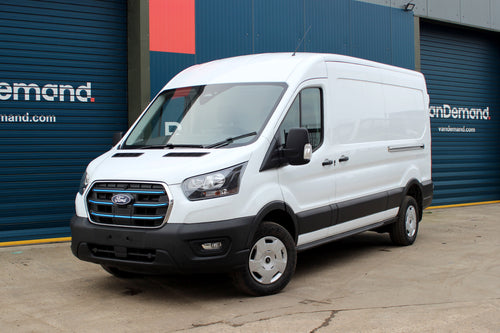
At CPD, conversion specification plays an important role in retaining operational payload. Material selection, body configuration and conversion design all contribute towards ensuring the finished vehicle remains practical for working fleet use. The payload depends on the chosen OEM, so for example, a Ford E-Transit typical payload will be 980 kg to 1,388 kg, depending on the specific model.
EV dropsides across different applications
Electric dropsides are already supporting a range of commercial operations across the UK.
Typical applications include:
- Highway maintenance vehicles
- Grounds maintenance fleets
- Utility contractors
- Traffic Management operations
- Facilities management providers
- Local authority fleets
For many of these operators, the vehicle spends the majority of its day travelling between sites rather than undertaking long-distance motorway journeys. This operating profile can make electrification particularly attractive.
Mixed fleets are becoming the norm
For most businesses, the future is unlikely to be entirely diesel or entirely electric.
Instead, many operators are adopting mixed fleets, using EVs where route profiles and charging infrastructure make sense while retaining diesel vehicles for applications that require greater range or flexibility.
This approach allows businesses to reduce fuel costs and emissions without compromising operational capability.
At CPD, we support both diesel and electric dropside conversions, allowing fleets to select the right solution based on their operational requirements.
Are EV dropsides ready?
For some businesses, the answer is already yes.
Where vehicles operate predictable routes, return to a depot each evening and prioritise lower running costs, EV dropsides are proving they can support real-world commercial operations.
They won't suit every fleet today, however, the technology has progressed significantly, and many organisations are already realising the benefits of electrification.
Key takeaway
The question is no longer whether EV dropsides can work. The better question is whether they work for your business.
For many fleets, electric dropsides now offer a compelling combination of lower running costs, reduced maintenance requirements and practical daily usability. When matched to the right application, they can support operational efficiency while helping businesses prepare for the future of commercial transport.
With both diesel and electric dropside conversion capability, CPD helps fleets build vehicle solutions around real operational demands rather than one-size-fits-all specifications.


