











While the EV debate may rage on Westminster, the productivity debate is the real on-site hot potato

Why it’s still a really good idea to invest in an EV welfare van
This week, politicians are debating EV targets, deadlines and shifting policies. In the real world, somewhere on a roadworks site in Britain, seven operatives will be debating whose turn it is to drive to the nearest services to pick up some cups of tea; and who is on the lunch run. Maccies, anyone?
One of those conversations will probably have a far bigger impact on productivity than the other.
Let’s forget about the big EV debate and focus on the productivity debate for a moment. A welfare van exists for one reason. You need to comply with Health and Safety at Work Act 1974 and Construction (Design and Management) Regulations 2015 (CDM); i.e. Everyone who works on a construction site must have access to toilets and facilities for washing, changing, eating and rest. It doesn’t take a genius to know that these all feed into the productivity equation. So, a welfare van fulfils your need to keep people working safely and efficiently. Everything else is secondary.
Agreed, in some situations, a static welfare cabin may be a more economical and effective way to achieve this, especially on larger sites where projects are going to be long-term. Arguably, though, vans are best when it comes to smaller, more transient crews, especially those working in remote, isolated or hard-to-access sites. Getting a static welfare unit delivered to those sorts of places on a flat bed, only to have to pack it up, unhook the generator, and move it on to work on the next 10 miles of roads and/or tracks or the next-door block of buildings, is probably an expensive logistical headache.
So, while the EV mandate takes its foot off the pedal, why on earth would you buy an electric Welfare van? Hear us out; you’ll be surprised at the added levels of flexibility, capability and even accountability.
In many respects, welfare vehicles are among the strongest candidates for electrification. Unlike high-mileage fleet vehicles that spend their lives covering hundreds of motorway miles each day, welfare vans often operate within defined geographic areas, return to depot overnight and spend significant periods stationary on site.
It’s also important to think beyond the notion that a welfare van is just a way to follow your crew around with brew-making facilities and a toilet. Modern welfare vehicles have become mobile workspaces; places to connect, charge equipment, review plans, complete paperwork, hold briefings and take breaks. In short, they are designed to keep crews on site and productive rather than travelling elsewhere to access basic facilities. Still, that doesn’t really big up the EV. So here are the benefits.
Solar
One of the more overlooked advantages of modern EV welfare vans is that they don't have to do all the heavy lifting alone. Lightweight (we’re talking 2 – 3 kgs per panel), roof-mounted, powerful solar technology can continuously trickle-charge dedicated auxiliary batteries throughout the working day, helping to support onboard welfare functions without drawing power from the vehicle's main traction battery.
Even in the incessant drizzle we Brits are calling summer this year, solar generation can contribute meaningful energy to welfare systems. The result is greater energy resilience on site, reduced reliance on external power sources and, in many instances, the elimination of the noise, dare we say, emissions and logistical inconvenience associated with towing and operating separate generators.
Compliance
Okay, so we’re talking about on-site environmental compliance here. The long list of acronyms that sit in the environmental section of a tender document. They may be debating deadlines in the House, but this is not going to obliterate the contractors’ need to demonstrate environmental responsibility alongside compliance with welfare obligations.
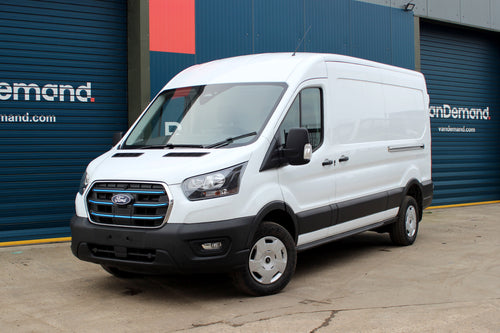
The EV Welfare van, and let’s take our Farizon L3H3 Welfare conversion launched at the CV Show earlier this year as an example, supports not just Lower Emissions and Ultra Low Emissions (ULEZ) preventing a Birmingham City Council scenario, but also helps to meet NRMM (reducing local exhaust emissions and eliminating greenhouse gasses), PAS2080 (that’s cutting your Scope 1 emissions) and Council CAPE (that’s the noise levels in particular) framework requirements.
Welfare your way
Just because it’s electric, it doesn’t mean you have to compromise on contents. Our Farizon L3H3 Welfare conversion, a world first for the Geeley-owned, built for business electric van manufacturer, has a significant payload of 1045kgs naked and a space of 13m3. Our prototype build used approximately 85% of the load capacity with inclusion of 7 M1 crash-tested seats and an occupancy of 7 average-sized people.
We do understand, however, that depending upon your industry sector, you’re likely to have different requirements. With this significant payload and volume, feel free to tailor the environment around your workforce. Need extra sinks and a double drying cupboard? No problem.
Of course, there are always more questions. We’re not going to refuse the answers. The current debate may focus on whether EV targets move by a few years. For council fleet operators, contractors, utilities and infrastructure providers, the more immediate question is whether crews have the facilities they need to remain safe, productive and compliant today.
Viewed through that lens, investing in an EV welfare van starts to look rather less like a political statement and rather more like a practical business decision. And the only hot potato is the one coming out of the microwave in your welfare van kitchenette. About 8 minutes of cooking time, we think. No need for a 45-minute round trip to McDonalds.
To discuss your EV Welfare needs, call us on 01642 607061.


