











Is payload still a constraint in EV LCV adoption for fleets?

Payload is always going to affect range in electric LCVs. This is not a technological limitation; it’s simply a function of physics. As battery-electric vans carry more weight, energy consumption increases. Real-world testing continues to show measurable reductions in range under load, typically in the region of 8–14%, with further impact when towing or operating in low temperatures.
When it comes to converted vehicles, the effect is amplified. Battery weight is only one component. Body structures, racking systems, welfare units and onboard equipment all contribute to total vehicle mass, reducing the margin available for payload and tightening operational limits. In that sense, payload remains a very real constraint. Not least because it shapes how electric vehicles can be deployed in practice.
Many fleets are successfully deploying electric LCVs, particularly in applications with predictable routes, controlled mileage and stable load profiles. In these scenarios, payload is not the limiting factor. It is one variable within a broader operating model that can be planned, measured and managed.
“Tell us something new.” We hear you shout.
Fleet operators already understand the relationship between payload and range. The question is no longer whether payload is a constraint. It is how much performance can be recovered once that constraint is accepted.
Where payload still decides the outcome
Payload becomes decisive at the point where vehicles move beyond standard specifications and are put to work.
For fleets operating close to weight thresholds, carrying specialist equipment, or relying on converted vehicles, the interaction between battery weight, body design and operational demand becomes significantly more complex. Add towing requirements or variable duty cycles, and the margin for error narrows quickly. In many cases, the difference between a vehicle that works and one that doesn’t is measured in tens of kilograms, not tonnes.
The constraint is no longer the electric vehicle in isolation. It is the relationship between vehicle platform, conversion design and operational requirement. Treat those elements separately, and compromises emerge. Consider them together, and solutions become possible. Thus, the conversation shifts from vehicle selection to vehicle specification…
From constraint to engineering design challenge
…And this is where the role of your chosen conversion partner changes.
Electric LCVs are not simply diesel equivalents with a different powertrain. They require a more disciplined approach to weight distribution, material selection and build specification. Small decisions in body design or equipment choice can have a disproportionate impact on usable payload and, by extension, operational viability.
In practical terms, that optimisation sits in the detail. Material selection alone will affect usable payload, with lightweight structures offering the same durability at reduced mass. Structural efficiency matters just as much as weight reduction.
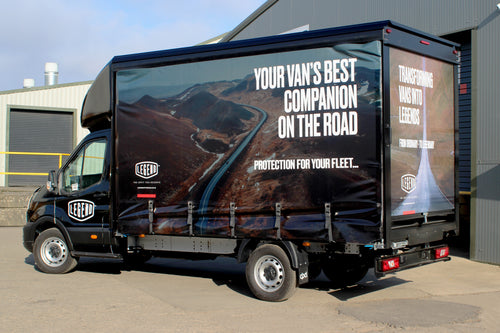
Beyond weight, aerodynamic efficiency is becoming increasingly relevant in electric applications. Solutions such as aerodynamic pods, like those developed for Luton bodies, can reduce drag and improve overall energy efficiency, particularly at motorway speeds. These are marginal gains, but in electric vehicles, marginal gains compound.
The difference is not in the vehicle. It is in how early the conversion partner is involved in defining the job requirement.
When vehicle design is aligned with operational need from the outset, payload is not simply managed; it is engineered. Working with a partner who understands both the base vehicle and the demands of the application allows fleets to design around constraints, rather than discover them in operation.
Reshaping constraints
Payload may no longer be the headline constraint in electric LCV adoption, but it has not disappeared. It remains a critical factor in specific applications, particularly where vehicles are heavily utilised, highly specified or operating close to their limits. The difference is that it now sits within a more complex, interconnected set of considerations.
The fleets making the most progress are those that recognise this early, taking a structured approach not just to specification, deployment and operational planning, but to the engineering of their vehicles as complete systems. Upfront conversations with conversion partners, leasing providers and suppliers are no longer optional. They are the point at which operational success is defined.


