











Luton Vs Panel Van: Which is right for your delivery fleet?

When choosing the right vehicle for your delivery operation, payload, cargo space, loading access, route types and operational efficiency all play an important role in determining whether a panel van or a Luton is the better fit for your business.
While both vehicle types are widely used across the logistics and delivery sectors, each offers distinct advantages depending on the nature of the work being carried out.
What is the difference between a Luton van and a panel van?
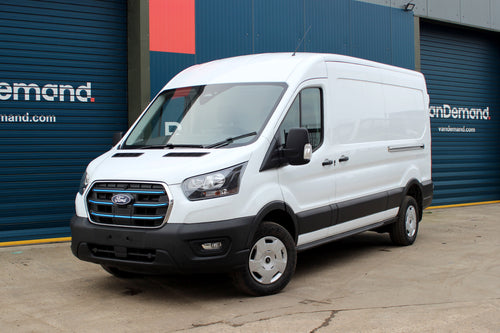
At a glance, the most obvious difference is the overall shape of the vehicle. A panel van features an integrated body structure where the cab and cargo area are built as one complete vehicle, making them popular for urban deliveries and multi-drop routes.
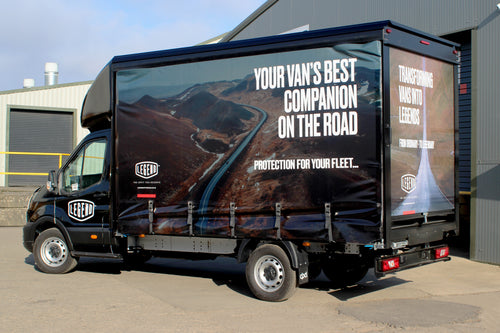
Lutons are often chosen for higher-volume transport and larger item deliveries. Lutons use a chassis cab with a separate box body conversion mounted onto the rear. An aerodynamic pod is usually positioned above the cab, designed to improve airflow and efficiency during longer-distance driving.
The table below shows the key differences to consider at a glance:
| Panel Van | Luton | |
| Design appearance | Integrated van body with consistent roof height and enclosed cargo area | Box body mounted onto a chassis cab with overhead pod for additional load space and aerodynamics |
| Cargo space | Smaller cargo area but easier access for frequent loading and unloading | Significantly larger cubic load space for bulky or high-volume deliveries |
| Payload |
Payload for large panel vans up to 1646 kg. This varies depending on vehicle size, drivetrain, OEM and EV/ICE specification Conversion options also reduce the payload |
Payload up to 1200kg depending on body size, tail-lift specification (reduced by approx. 250kg), chassis rating and EV/ICE configuration |
| Loading | Rear and side loading access, ideal for tighter delivery environments | Large rear roller shutter or barn-door access, often combined with a tail-lift for heavier or bulkier goods |
| Driving and manoeuvring | Greater manoeuvrability for urban routes, residential areas and multi-drop operations | Better suited to motorway driving and larger delivery routes where cargo volume is prioritised over manoeuvrability |
| Best suited for | Courier work, parcel delivery, service fleets and multi-drop operations | Bulky goods, furniture, palletised loads and operations requiring greater cargo volume rather than maximum payload weight |
Choosing ICE or EV will adjust some of the above variables.
Cargo Space and Payload
One of the biggest deciding factors between a panel van and a Luton is cargo volume.
Panel vans offer practical internal storage while maintaining a compact overall footprint. This makes them ideal for businesses regularly operating in towns, city centres or residential delivery environments where manoeuvrability matters.
For many delivery fleets, ply-lined panel vans provide a practical and cost-effective solution. Ply-lining helps protect the interior body panels from dents, scratches and operational wear caused by parcels, pallets and shifting loads. Over time, this can help reduce repair costs and preserve vehicle condition across the fleet lifecycle. Read our case study here about a recent ply-lined panel van.
Other options include internal shelving and racking, such as parcel shelving and shopping delivery rack systems designed to improve organisation, maximise cargo space and support faster loading and unloading during multi-drop operations.
Lutons, however, offer significantly greater cubic load space thanks to their box body design. This makes them particularly useful for transporting bulky goods, large consignments, and higher delivery volumes at longer distances.
For operators handling heavier or larger deliveries, tail-lifts are also commonly integrated into Luton conversions to improve loading efficiency and reduce manual handling.
Electric considerations
The rise of electric commercial vehicles is also changing fleet considerations. Battery weight can affect available payload, particularly on larger conversions. This is why 4.25T electric Luton conversions are becoming increasingly important, helping operators maintain practical payload capacity while transitioning towards electrified fleets.
Costs
Cost differences between panel vans and Lutons extend beyond the initial vehicle price.
Panel vans are often:
- Lower cost to convert
- More fuel efficient
- Easier to maintain
- Better for lower-volume operations
Lutons can provide:
- Greater delivery efficiency for high-volume fleets
- Improved load flexibility
- Fewer repeat journeys due to larger cargo capacity
Ultimately, the right vehicle depends on operational requirements, delivery type and route profile.
Panel Van and Luton Case Studies
When it comes to delivery fleet conversions, operational practicality is key. At CPD, we provide conversion solutions designed around the real-world demands of logistics, courier and transport operators.
Panel van case studies:
Luton case studies:
Panel Van and Luton Conversions for sale in the UK
CPD supplies a wide range of panel van and Luton conversions designed for delivery fleets, logistics operators and commercial businesses across the UK.
Some of our conversion options for delivery operations include:
- Ply-lining
- Tail-lifts
- Internal storage solutions
- Specialist fleet fit-outs
- Electric vehicle conversions
Whether your operation requires a compact urban delivery van or a high-capacity Luton body, selecting the right conversion can help improve operational efficiency, reduce vehicle wear and support long-term fleet value.


